Description
Highlights of the Milwaukee 2904-22 Hammer Drill Driver Kit
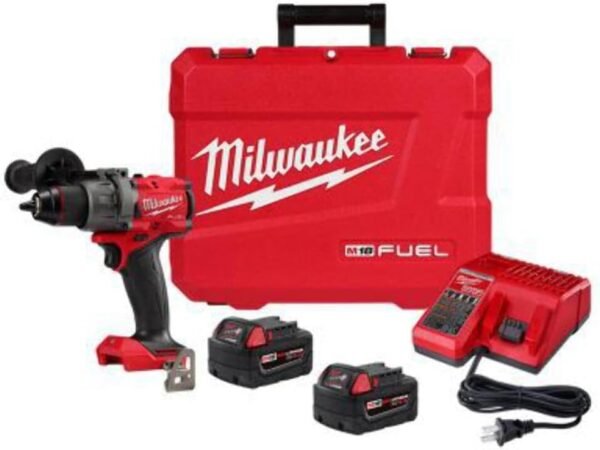
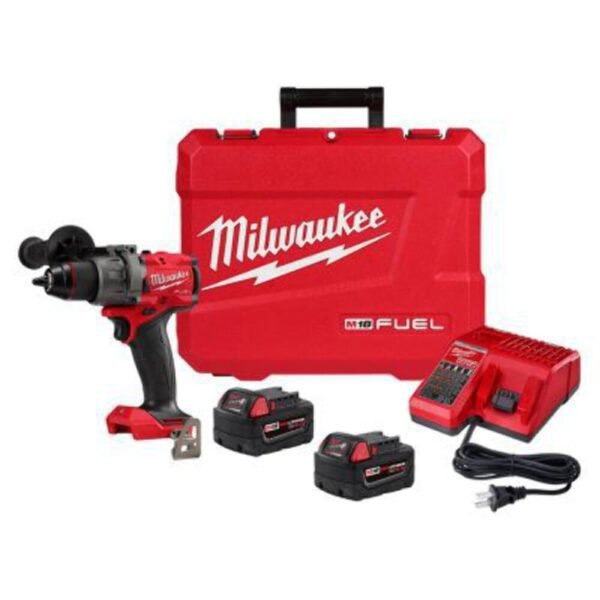
The Milwaukee 2904-22 12V 1/2” Hammer Drill Driver Kit is listed on durability and power, and the hardware backs that up. The 1/2″ all-metal chuck with carbide teeth is the standout item, since carbide jaws are what stop a bit creeping under hammer action, and the metal body is what survives being dropped on a slab. One correction on the listing before anything else: the voltage field reads 12V while the same page describes a multi-voltage charger covering 12V and 18V packs and ships two 5.0Ah batteries, so the voltage label cannot be taken at face value. Anyone specifically shopping Milwaukee’s 12V line wants the M12 Fuel hammer drill instead. The mechanical clutch is the other detail worth noting, delivering repeatable torque settings so fasteners seat without stripping.
The brushless motor is the reason the tool holds speed under load rather than bogging down, which is what separates hammer drilling in brick and concrete from merely attempting it. The two-speed gearbox covers both jobs a drill has: high torque for large bits and lag work, high speed for clean small-diameter holes. The kit includes two 5.0Ah batteries, a generous pairing at this capacity and the main reason work continues uninterrupted, since one pack charges while the other cuts.
Drawbacks of the Kit to Consider
The listing’s weight figure is the first thing to question. It states nearly 13 pounds, which is not credible for a compact hammer drill fitted with a belt clip and reads like the packed weight of the whole kit, drill, two batteries, charger and case together. Take the in-hand weight as unknown from this listing, and expect a tool that is heavy enough to tire the forearm on long overhead runs regardless. The all-metal belt clip is welcome for portability, though it is bulky enough to catch on things.
The battery charging system is the other consideration. A multi-voltage charger that handles both 12V and 18V packs is genuinely useful if the kit is joining an existing collection, but filling a 5.0Ah pack takes time, and anyone accustomed to rapid chargers will notice the wait. Hammer mode also transmits real vibration to the hands on a tool without a dedicated damping system, which is a comfort limit rather than a performance one. Buyers who want the same platform in a smaller body should look at the more compact M18 Fuel hammer drill.
Performance Across Different Materials
Material capacity is where the specification earns its keep. In wood, the rated capacity runs to holes of 2.63 inches, which is self-feed bit territory rather than twist bit work and puts joist and stud drilling well within reach. Concrete and brick are handled in hammer mode, the point of buying this class of drill in the first place, and doing that job without dragging out a rotary hammer is the practical time saving.
Metal is the narrower case: the stated maximum capacity of 0.5 inches means this is not a tool for repeated large holes in thick steel plate, though it covers ordinary contractor and home improvement metalwork comfortably. The maximum torque of 1,400 inch-pounds is the number that matters for driving, and at that rating stalling on screws and bolts is unlikely to be the constraint.
User-Friendly Design and Accessories
The side handle is not an afterthought on a tool with this much torque. It keeps the drill under control when a bit grabs in masonry, which is the difference between a clean hole and a wrenched wrist. The included tool case keeps the drill, both packs and the charger together for anyone moving between sites.
Controls are conventional and well placed: a variable speed trigger and a forward and reverse switch that can be worked in gloves. The built-in LED covers dark cabinets and stud bays, though it is a locating light rather than task lighting. The design priority is clearly durability and portability.
Price Worthiness of the Milwaukee Hammer Drill Kit
On value for money, this kit sits above entry-level pricing and answers for it with contents rather than badge. Two 5.0Ah batteries and a multi-voltage charger represent a large share of the price on their own, and both carry over to any other tool on the platform, which is the argument that makes kits cheaper than bare tools over time.
Battery capacity and a brushless motor are the two things that most separate a long-lived cordless drill from a disposable one, and both are present. Against cheaper kits that cut capacity or use brushed motors, this is the more durable buy. Occasional users doing light work will still find it more tool than the job needs, and anyone who already owns packs and a charger should check the 2904-20 listing before paying for batteries twice.
Alternative Offerings and Market Rivals
Set against the field, the contrasts are consistent. DeWalt and Makita both offer hammer drills at similar voltage ratings, often in lighter bodies, which is a genuine advantage on long jobs. What those lighter tools tend to give up is all-metal chuck durability or included battery capacity, and a kit supplied with smaller packs costs more later. The DEWALT DCD996B is the obvious three-speed alternative to weigh up.
Bosch builds well-regarded ergonomics and vibration control into its hammer drills, an area where this Milwaukee is plainer, but Bosch kits at this level rarely ship 5.0Ah lithium-ion batteries as a pair. If hammer performance and runtime are the priorities, this kit is the stronger specification. If charging speed or a lighter tool matters more, rivals answer better.
Versatility and Everyday Use
The range of work this covers, from home repairs through to construction tasks, is what justifies buying a hammer drill rather than a plain driver. Hammer drill mode switches in for masonry, and the two-speed gearbox spans everything from pilot holes in softwood to lag bolts in framing without changing tools.
The honest way to read this kit is by frequency of use: a heavier, better built drill repays itself when it is picked up every day, and simply costs comfort when it lives in a cupboard. The grip and side handle spread the load enough to keep control on long runs, and the rest of the hammer drill reviews on this site make the weight and runtime trade clearer if this one lands wrong.
Summary of Positive Features
- Powerful brushless motor delivering strong torque and speed
- Durable 1/2″ all-metal chuck with carbide teeth for strong bit retention
- Two 5.0Ah lithium-ion batteries offering extended runtime
- Hammer drill mode rated for drilling into brick and concrete
- Mechanical clutch for consistent fastener driving
Notable Limitations
- Listed weight is unreliable, and the tool is heavy enough to tire the arm on long jobs
- Battery charging time is long compared with rapid chargers
- Vibration in hammer mode is noticeable without dedicated dampening
- The belt clip is bulky and will not suit every user
On the specification, this kit blends power, durability and versatility into a strong case for anyone who needs a cordless hammer drill with real runtime behind it. It is not the right answer for every buyer, particularly those sensitive to tool weight or charging speed, but the build and rated output make up for that in demanding work.


