Description
Robust Design and Build Quality
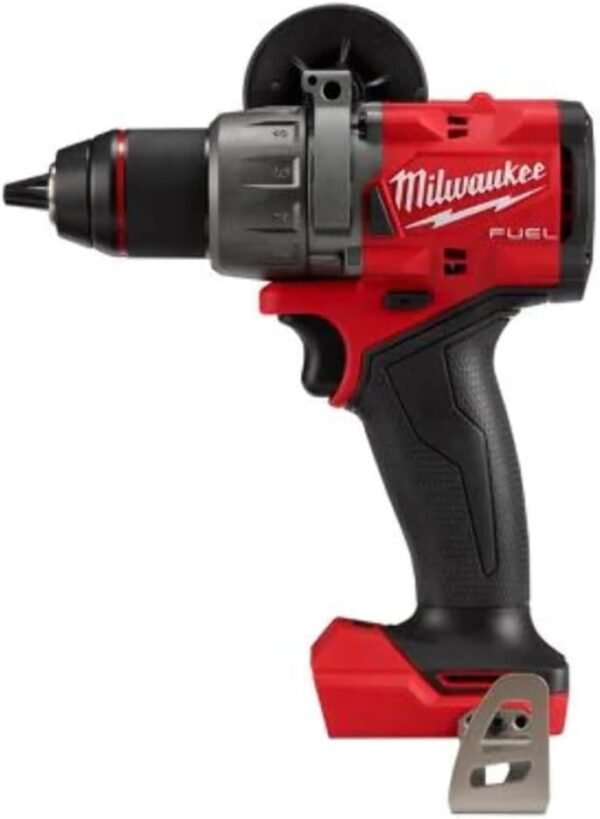
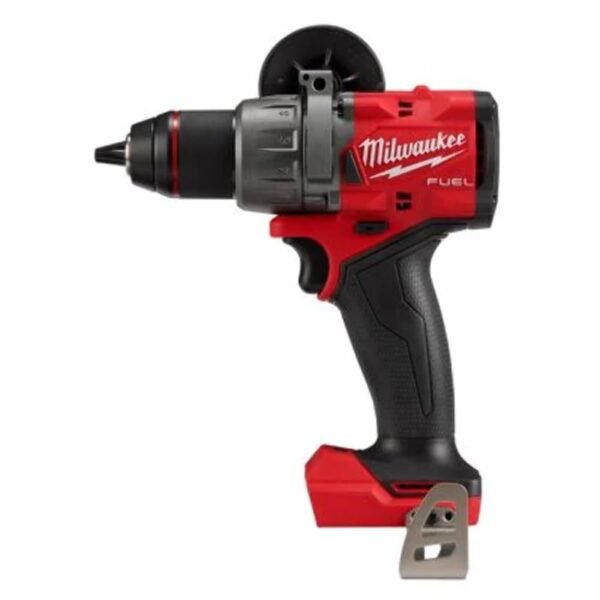
The first thing the spec sheet establishes about the Milwaukee 2904-20 1/2″ Hammer Drill/Driver (Bare Tool) is solid construction. The all-metal chuck with carbide teeth is not just tough sounding on paper: carbide teeth are what hold a bit securely under load, which is what stops a bit slipping. The drill’s metal body adds ruggedness without pushing the weight into unreasonable territory. At 4.19 pounds it lands in a sensible middle, heavy enough to feel substantial and light enough to hold up over an extended session. The chrome finish gives it a professional look, and the all-metal belt clip is a small inclusion that matters on a ladder.
Powerful Performance and Versatility
One caution before the numbers: the listing is internally inconsistent about the platform, naming the tool a 12V drill while the specification block states an 18-volt battery, so the voltage field on the product page should not be used to decide which packs to buy. Check the platform on the battery itself rather than the listing. The performance figures are more usable. The spec sheet lists a maximum torque of 1,400 inch-pounds, which is strong for a tool in this class, along with a maximum rotational speed of 650 RPM and two-speed settings that separate high-torque, low-speed drilling from faster driving work. The variable speed trigger adds the finer layer of control, ramping speed with trigger pressure, which is what makes one tool workable for both delicate screw driving and aggressive hammer drilling into brick or concrete. The hammer drill mode is the reason to pick this over a plain drill/driver, since masonry work no longer means reaching for a second tool.
User Experience and Handling
Handling is mostly a strength. The mechanical clutch keeps driving force consistent, which is the feature that prevents overdriven screws and stripped heads on repetitive work. Controls are straightforward, and the compact dimensions (11″ L x 9″ W x 4″ H) keep it nimble in tight spaces next to bulkier tools. The catch is the package itself: this is a bare tool, with no battery and no charger, so it only makes financial sense for someone already holding Milwaukee packs. Buyers starting from nothing should look at the kitted 2904-22 version, which ships with batteries and a charger. Heat buildup after prolonged heavy use is the other thing to expect, normal for the class but worth a pause on a long run.
Positive Features Worth Highlighting
- Strong runtime when paired with Milwaukee’s 5.0Ah batteries, which is where this platform tends to beat competitors.
- Durability of the all-metal chuck, which holds bits securely even under high torque.
- Mechanical clutch for consistent driving force, reducing frustration on repetitive tasks.
- Hammer drill mode rated for concrete and masonry, which makes it a versatile pick across different projects.
Areas for Improvement
- The body is bulky for smaller hands, which may be a challenge for anyone with less grip strength.
- No battery or charger included means an extra initial outlay for anyone not already invested in the Milwaukee ecosystem.
- Heat buildup during extended heavy-duty use gets uncomfortable without breaks.
- The chuck maxes out at 1/2 inch, fine for most tasks but a ceiling on larger drill bits.
Competitors and Market Rivals
Against popular rivals, the Milwaukee holds its own on durability and torque output. The DeWalt DCD996B offers higher rated RPM and a brushless motor, which is the efficiency argument some buyers will prefer. Makita’s XPH12Z counters with lighter weight and a comfortable grip, though it does not match Milwaukee on runtime from a single charge. What sets the 2904-20 apart is the mechanical clutch, which many competitors leave out, and which delivers more consistent control in screw driving. Within Milwaukee’s own lineup, the M18 Fuel 2804-20 is the closer comparison for anyone weighing size against output. The bare tool packaging remains the sticking point for beginners, since rival kits often bundle a battery and charger at a similar headline price.
Price Worthiness and Value Proposition
Weighed against the feature set and Milwaukee’s record on durability, this tool offers solid value for money. The price looks steep for a bare tool at first glance, but for anyone already holding compatible packs it becomes a cheap way to add real hammer drilling capability. The combination of power, runtime and build quality suits professionals and committed DIYers who want one drill to cover both roles. The switch between hammer drilling and regular driving also saves money in the plainest way, by removing the need for a second tool. Buyers who mainly want something small and light for cabinet and fixture work may be better served by the M12 Fuel hammer drill, which trades output for a genuinely compact body.
Final Thoughts on Practical Use
The appeal of this drill is that it covers a wide span of work without a tool change. Its balance of power and control stretches from furniture assembly to masonry, and the variable speed and clutch settings are simple enough that a less experienced user is unlikely to strip screws with it. The belt clip earns its keep moving between indoor and outdoor tasks, and the metal chuck and body point to a tool built for repeated job site use. Minor drawbacks aside, mainly the bare tool packaging and the heat under sustained load, it is a dependable choice, and it stands comparison with the full hammer drill lineup.


