


Description
Highlights of the DEWALT 20V MAX SDS Plus 1 Inch Cordless Rotary Hammer
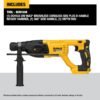
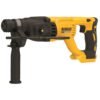
The DEWALT 20V MAX SDS Plus 1 Inch Cordless Rotary Hammer with D-Handle, Bare Tool Only (DCH133B) is built around one headline number: 2.6 Joules of impact energy, which is the figure that decides how quickly a bit clears concrete. The brushless motor and the German-engineered mechanism behind it are the durability and runtime half of the argument. The lightweight body is what makes the tool practical for forming, rod hanging, and structural connections, all jobs where a heavy hammer held at chest height for an hour stops being viable. The rotating dial switching between drill, hammer drill and chip modes adds the versatility, letting one tool cover work that would otherwise need two. For its category, this is a well judged balance of power and manageable size.
- Powerful 2.6 Joules impact energy for fast concrete drilling
- Brushless motor for longer runtime and durability
- Lightweight and easy to handle for extended use
Drawbacks to Keep in Mind
The strengths come with conditions. The absence of a battery and charger in the package is the first, so anyone without compatible 20V MAX packs is looking at a larger purchase than the sticker suggests. The tool is light for its class but still weighs about 5 pounds, enough to be felt on very long sessions or overhead work, and buyers who prioritize that above all should compare the lighter DCH172B first. One specification needs flagging: the listing reports a maximum rotational speed of 5550 RPM, a figure well outside the normal range for an SDS Plus rotary hammer and much closer to a blows per minute count, so that field on the product page should not be used to compare tools. The plastic and metal construction is sturdy enough, though more ruggedized material in the high-impact areas would suit heavy demolition better.
- Battery and charger sold separately
- Weighs 5 pounds, which can be tiring over time
- Listed rotational speed figure is inconsistent and should not be used for comparison
Versatile Performance in Various Applications
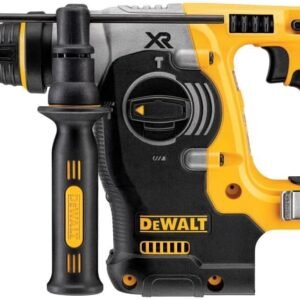
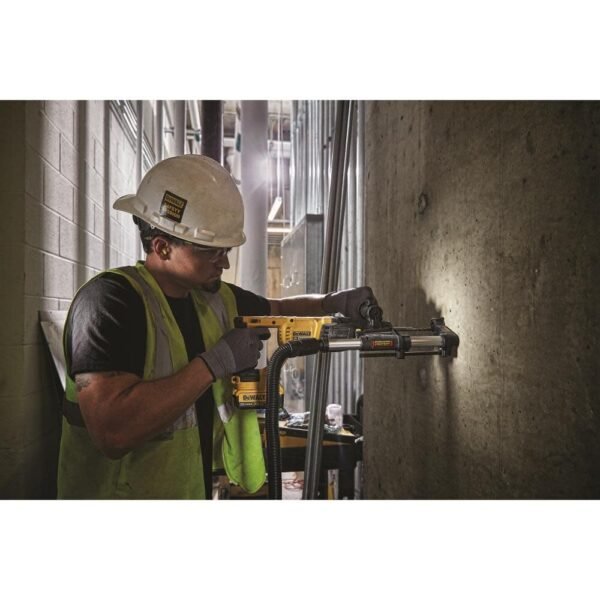
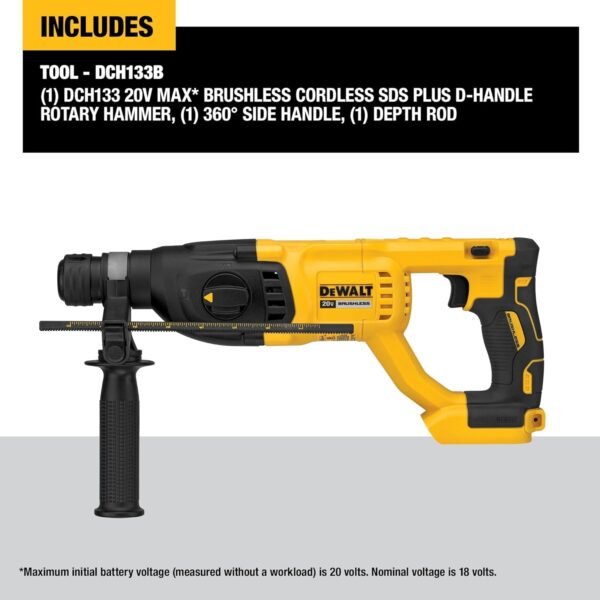
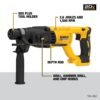
The application list DEWALT publishes runs from beam and column anchorage to steel stanchion mounting and clip and bracket mounting, which is a fair description of where a 1 inch SDS Plus hammer belongs. The variable speed control is what makes that spread workable, since anchor holes in concrete and pilot holes in lighter material do not want the same trigger. Switching modes on the dial is a single movement, so moving between drilling, hammer drilling and chiselling does not interrupt the work. The included 360 degree side handle and depth rod are the accessories that matter most in practice, giving control on angled surfaces and repeatable depth without marking the bit with tape. That balance of power and control is what makes the tool a reasonable choice for professionals and committed DIYers.
Ease of Use and Ergonomics
For a tool with this much impact energy, the ergonomics are sensible. The D-handle design gives a solid grip and spreads the load, which is what reduces fatigue over a long run. The compact dimensions (16.2″ L x 9″ W x 4″ H) keep it manoeuvrable in tight spaces where bulkier models have to be worked around. The plastic housing is the compromise: it keeps weight down, but it feels less substantial than the reinforced materials some competitors use. Working in its favour, the brushless motor runs quieter and cooler than a brushed equivalent, which is a real benefit on a long job rather than a specification detail. On the whole the tool trades a little perceived toughness for portability, and for most users that is the right trade.
Product Competitors and How It Stacks Up
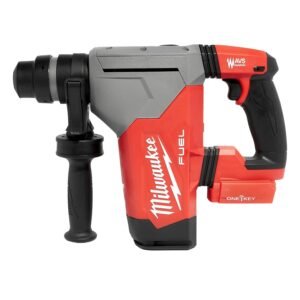
Set against the Makita XRH07Z or the Bosch GBH18V-26K, the distinctions are clear enough. Makita generally leads on raw power and impact energy, which suits heavier demolition, and its corded HR2641 rotary hammer is worth a look for anyone who does not need battery power. Bosch tends to lead on vibration control and ergonomic refinement. The DEWALT answers with its durable German-engineered mechanism and efficient brushless motor, a combination that favours reliability and runtime over headline output. For buyers who value lightweight design and battery compatibility across other 20V MAX tools, it scores well. Anyone needing more hammer than this should move up to the DCH273B rather than push the DCH133B past what it is built for.
Price Performance and Value Proposition
On price-to-quality ratio, this rotary hammer holds up. It is not the cheapest cordless option, but the feature set justifies the gap for anyone who needs a dependable tool rather than an occasional one. The 3-year limited warranty is a meaningful part of that, since it reflects what the manufacturer expects the tool to survive. As a bare tool the price is lower to begin with, which makes it an efficient way to expand a collection for someone already holding 20V MAX batteries. Anyone starting from nothing has to add battery and charger costs before comparing, and at that point a corded model such as the D25263K may work out cheaper for shop-based work. Taken together, the power, versatility and cordless convenience represent strong value for professionals and serious hobbyists.
Key Benefits That Stand Out
- Brushless motor for improved efficiency and longer battery life
- Lightweight design reduces fatigue during extended tasks
- Versatile rotating dial with three modes: drill, hammer drill, and chip
- Compact size and ergonomic D-handle for better control
- Durable German-engineered mechanism supports long term reliability
Areas for Improvement to Consider
- Lack of included battery and charger means additional expense
- Slightly heavier than some competing cordless rotary hammers
- Construction could be more rugged in critical stress areas
- Vibration dampening lags behind the leaders in the class
Final Observations on Fit and Value
For concrete and steel work, this cordless rotary hammer punches above its size. Changing modes takes no effort, and the side handle provides the control that makes awkward angles manageable rather than merely possible. Portability is the strongest part of the case: on a job site, a tool with no cord to route, tape down or trip over saves time that never shows up on a spec sheet. The costs are the extra outlay for batteries and a moderate weight that is only moderate compared with corded machines. For anyone already invested in the DEWALT 20V MAX ecosystem, it is a sound addition that delivers dependable power, versatility and comfort, and it compares well with other 1 inch class rotary hammers.