

Description
Ergonomic Design and Handling Comfort
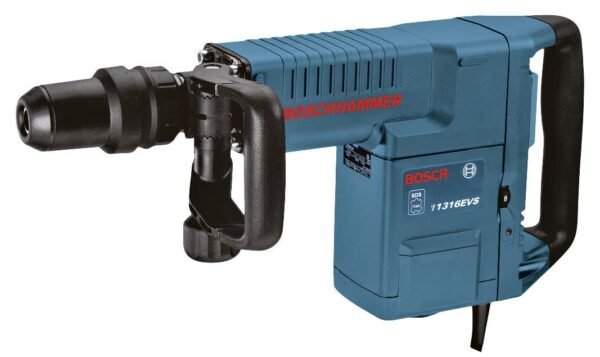
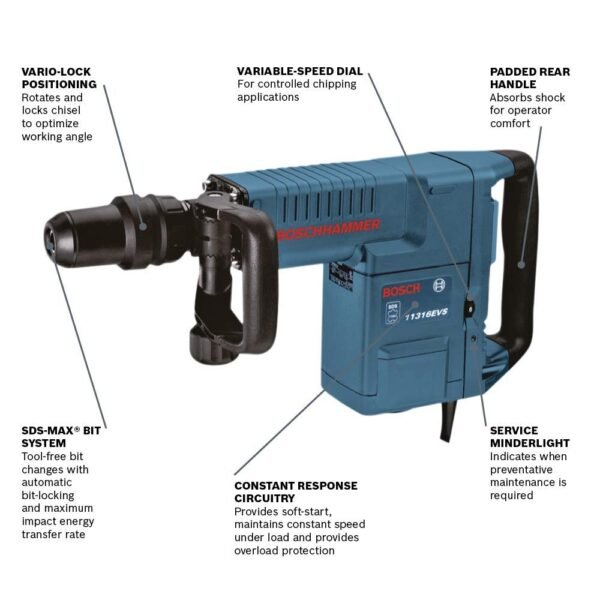
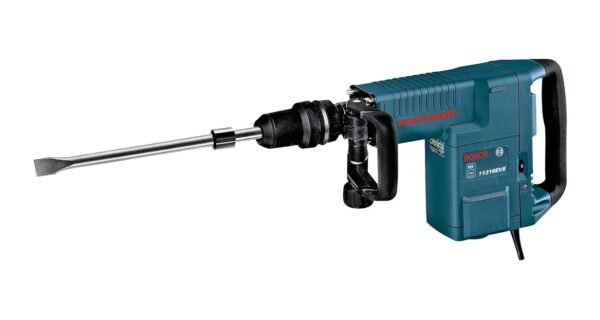
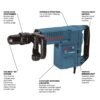
The BOSCH 11316EVS 14 Amp SDS-Max Demolition Hammer is listed at 22.5 pounds, which is genuinely restrained for a tool in this class and the first number that should interest anyone who has spent a day breaking slab. Where rivals of similar output ask the operator to carry more mass, this one uses a pistol-style grip that keeps the working line behind the bit. The padded rear D-handle and 360-degree auxiliary handle between them cover most working angles, which is what makes the tool usable in a corner or against a wall rather than only straight down. Technique matters more than muscle on a hammer like this: forcing it slows the cutting rate, and steady pressure lets the mechanism do the work. The vibration control is the other half of the comfort story, and less vibration reaching the hands is what determines how long an operator can stay on the tool.
Power and Variable Speed Control
The 14 Amp motor is rated for an impact energy range of 4.4 to 18.4 ft-lbs with speed adjustable between 900 to 1,890 blows per minute. That spread is the point of the specification: light blows at high frequency suit plaster, tile beds and render, while the top of the range is for structural concrete. The variable speed dial is what makes a single tool cover both, and dialing it back is how a chisel is kept from destroying a surface that only needed lifting. Constant Response circuitry holds speed as the load rises, which is what stops the blow rate sagging halfway through a cut. A soft-start mechanism eases the initial torque so the hammer does not twist out of the operator’s grip on start up, a safety feature as much as a comfort one.
Bit Changing System and Vario-Lock Feature
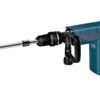
The SDS-Max bit system supports tool-free bit changes: a twist and a push seats the bit, with no separate key or wrench to lose on site. The automatic bit locking mechanism is rated to hold under demolition loads, which is the demand that separates SDS-Max from lighter fittings. The Vario-Lock system rotates and locks the chisel into 12 different positions at 30-degree increments, so the cutting edge can be squared to the work instead of the operator contorting to match the tool. That matters most on uneven surfaces and in confined corners, and it separates this from simpler chipping hammers. Buyers who need to drill as well as break should look at a combination tool such as the Bosch RH745 SDS Max hammer.
Service and Maintenance Indicators
The ServiceMinder light is a practical inclusion rather than a marketing one. It signals eight hours before a service is due instead of after a fault, which on a tool that lives on demolition sites is the difference between planned downtime and a dead hammer mid-job. Bosch also specifies an improved tool holder with advanced heat treatment and dust-seal protection, and the dust seal is the meaningful part: concrete dust in the holder is the usual route to a worn tool interface and sloppy bit fit.
Positive Features Worth Noting
- Variable speed dial with six precise settings for different materials
- Soft-start and overload protection for safe operation
- 360-degree auxiliary handle for enhanced control and comfort
- SDS-Max bit system for fast, tool-free bit changes
- ServiceMinder light to prevent unexpected tool failure
Taken together, that list describes a professional-grade specification without unnecessary complication.
Limitations to Keep in Mind
- At 22.5 pounds it is lighter than many rivals but still heavy for sustained overhead work
- The power cord length of 12 feet is restrictive in a larger work area without an extension lead
- The variable speed dial is useful, though the increments are not the quickest to judge under pressure
- The price sits high, reflecting the build and electronics, which is hard to justify for occasional use
None of those are faults in the engineering, but they do decide whether this is the right hammer for a given job site. Lighter demolition and drilling work is better served by a mid-weight SDS-Plus tool such as the Bosch RH328VC, which is far easier to hold above shoulder height.
Product Competitors and Market Comparison
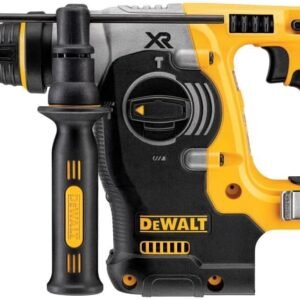
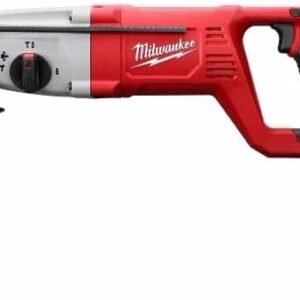
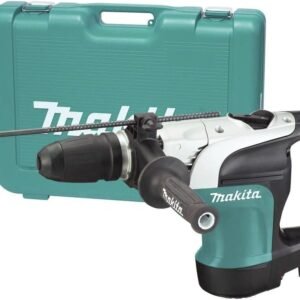
Against demolition hammers like the Makita HM1810 or the DeWalt D25980K, this Bosch holds its position on comfort rather than raw output. The Makita publishes comparable impact energy but in a bulkier, heavier body, which is felt long before the end of a shift. The DeWalt has a reputation for rugged construction, though it does not match the vibration control and handle arrangement here. The SDS-Max quick bit change and the Vario-Lock positioning system give this model more working versatility than most rivals offer, particularly for precise work across varied surfaces. Within Bosch’s own range, the 11321EVS demolition hammer is the closest alternative to weigh against it.
Some competitors do offer longer cords or cordless operation, neither of which this corded Bosch provides. The Bosch electronics package, with soft start and overload protection, is more comprehensive than many alternatives, which shows up as steadier operation and fewer abrupt stalls. For professionals weighting comfort, control and reliability, this hammer is the stronger buy. For heavier breaking where weight is an asset rather than a liability, the larger 11335K jack hammer is the more suitable class of tool.
Value Assessment: Is It Worth the Investment?
At this price the tool is aimed squarely at serious users who need durability, power, and precision together. The premium features, namely the ServiceMinder light, soft-start technology and variable speed control, are the ones that repay themselves for anyone regularly breaking concrete or chipping masonry. The ergonomic design reduces operator fatigue, and fatigue is what quietly slows a demolition job more than tool output does.
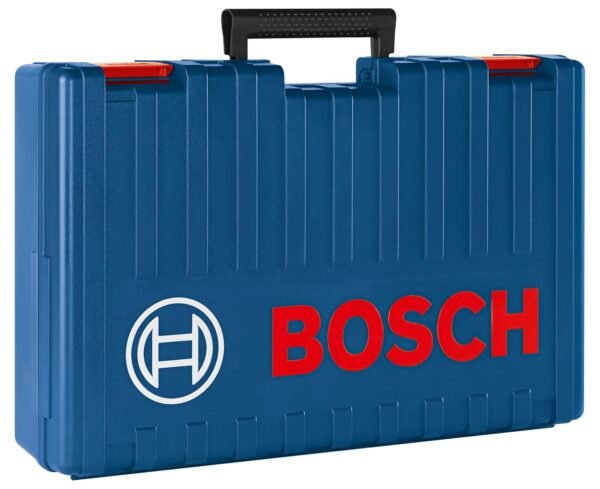
For occasional use the cost is harder to defend next to simpler chipping hammers. The counterargument is long-term durability and ease of maintenance, which reduce the repair bills that end cheaper tools early. The included carrying case helps with transport and storage. Anyone still deciding between a chisel-only hammer and a combination tool should work through the wider set of combination and demolition hammers before committing, because that decision is harder to reverse than any other on this list.