Description
Positive Features of the Bosch 11335K Jack Hammer Kit
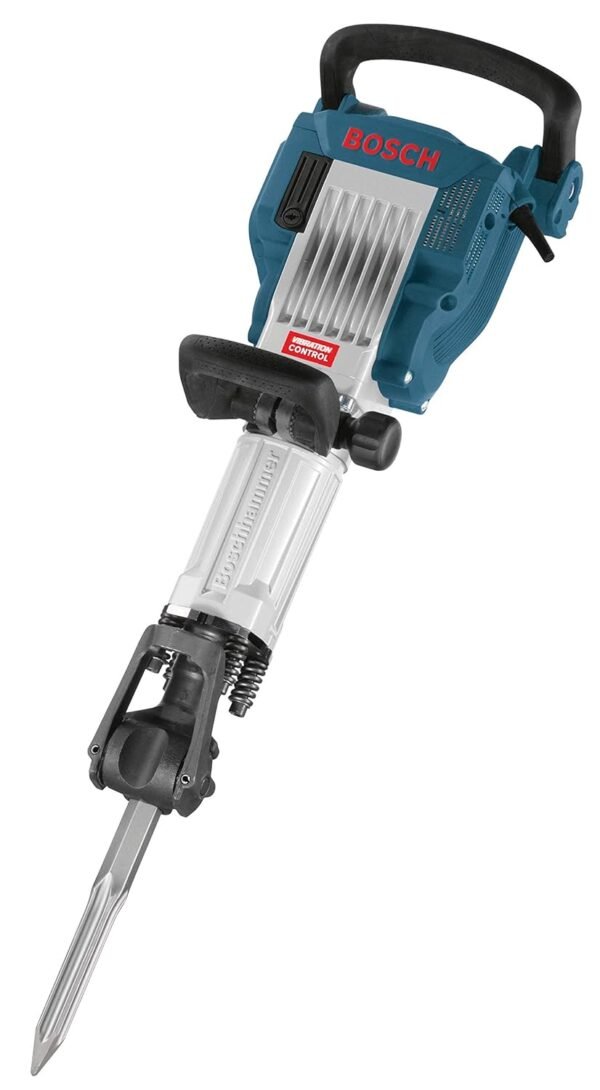
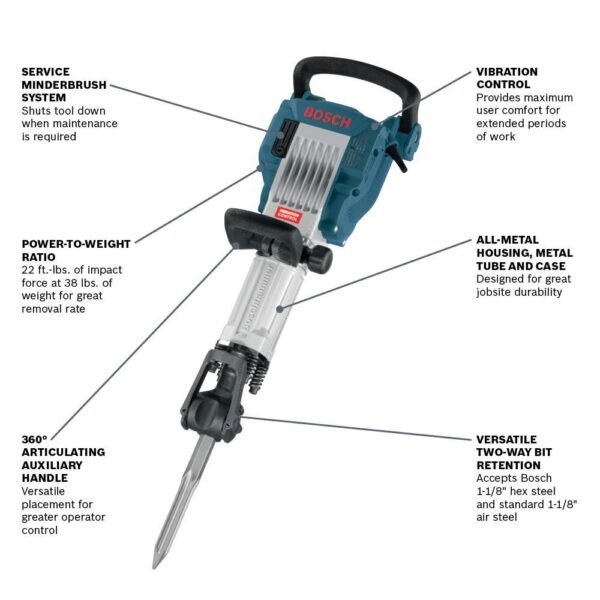
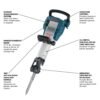
The BOSCH Demolition Jack Hammer with 1-1/8-Inch Hex, 35-Pound Concrete Breaker (11335K) makes its case on power-to-weight ratio. Delivering 22 ft.-lbs. of impact energy at a tool weight of 38 pounds puts it in a strong position among heavy-duty demolition tools, since impact energy is what breaks material and every pound above it has to be carried. The 15.0 Amp motor drives 1,300 blows per minute (BPM), a rate suited to removing concrete and asphalt steadily rather than in bursts. The all-metal housing and metal tube construction are the durability half of the specification, and on a breaker they are not decorative.
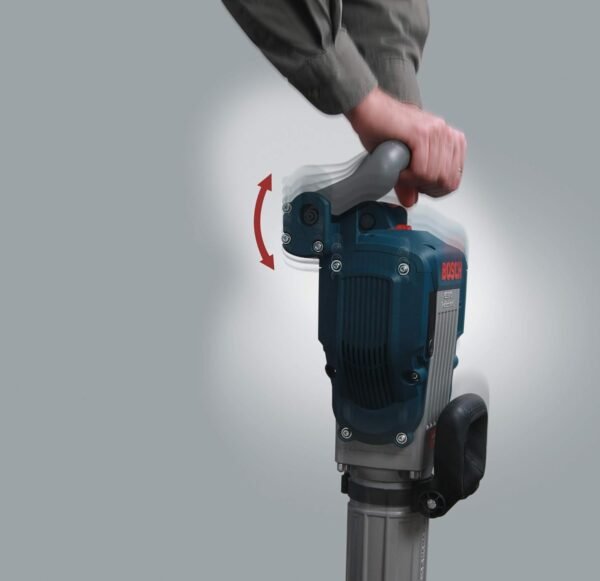
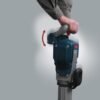
The Vibration Control system is the feature that separates this from a basic breaker. A longer air cushion inside the hammer mechanism and a shock-reducing top handle together cut the energy transmitted back to the operator, which is what determines whether a person can work a full shift without the hand numbness and arm soreness associated with jack hammer use. The 360 degree articulating auxiliary handle supports that further, offering grip positions for horizontal and vertical work rather than forcing one stance on every job.
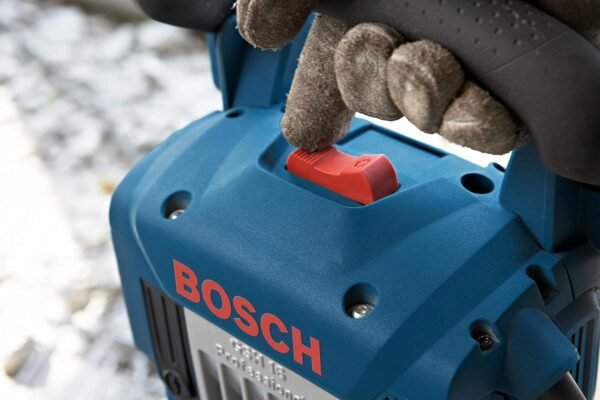
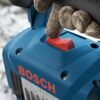
The two-way tool retainer is the practical detail buyers tend to overlook. It accepts standard 1-1/8 inch hex air tool steel with a retaining collar or Bosch’s internal-locking combo steel, so bits are not restricted to one proprietary system. The grease-packed gearbox and hammer mechanism are specified for smooth running without jerking or stalling under load. The Service Minder brush system completes the package by shutting the tool down when maintenance falls due, which converts brush wear from a surprise failure into a scheduled task.
Key Benefits
- Powerful impact energy with manageable weight
- Effective vibration control for reduced user fatigue
- Versatile bit compatibility via two-way tool retainer
- Durable all-metal construction for tough job sites
- Maintenance alert system that supports tool longevity
Areas for Improvement on the Concrete Breaker
The strengths come with weight, and the listing quotes it three different ways. The product name says 35 pounds, which is the breaker class rather than a measurement; the tool itself is listed at 38 pounds; and the complete kit with its case and accessories comes to 57 pounds. The last figure is the one to plan around, because that is what has to come off a truck. For anyone not used to demolition tools, that is physically demanding over a long session, particularly on vertical or overhead work, and vibration control only offsets part of it.
Handling takes practice. The in-line design is good for balance but requires a considered stance and grip to stay in control during heavy breaking, which is not obvious to a first-time user. The carrying case is convenient on its wheels yet bulky, and it contributes a fair share of that 57 pound total when moving between sites.
The price point also rules it out for casual users and most homeowners. This is a tool built for professionals or committed DIYers who need dependable performance repeatedly, not once a year. The lack of a cordless option keeps it tethered to a cord, which limits where it can work, though the corded electric power source delivers constant output with no battery to manage.
Drawbacks
- Hefty overall weight challenging for prolonged use
- Bulky carrying case adds to transport load
- Corded power source limits mobility on some sites
- Learning curve in handling the in-line design effectively
Versatility and Handling Features
The 360 degree articulating auxiliary handle is worth returning to, because it is the feature that gives operator control in tight or awkward positions. Being able to set the handle at a chosen angle is what makes prying up slabs or breaking sidewalk practical and safer, rather than a matter of brute force. Paired with the shock-reducing top handle, less vibration reaches the hands, which is what allows a firm grip to be held without excessive strain.
The tool’s relatively compact form for its output makes it manageable on cramped sites. The all-metal housing and tough composite components are specified to take rough handling and outdoor conditions without cracking or wearing prematurely, which is the realistic environment for a breaker.
The two-way tool retainer is a genuine cost advantage over a long project, since switching between Bosch’s internal-locking combo steel and standard hex steel is quick and neither is locked behind a proprietary system. Worth noting for anyone building a collection: SDS Max machines such as the Bosch 11321EVS use an entirely different steel, so bits do not carry between the two systems.
Comparing to Popular Competitors
Against demolition tools like the Makita HM1810 and the DeWalt D25980, the 11335K offers higher impact energy than many rivals, which shows up as faster material removal. The Makita is lighter but does not match the 22 ft.-lbs. impact force, a gap that becomes obvious in thick concrete. DeWalt’s machine has comparable power output but no equivalent of the Service Minder brush system, which is a real advantage for tool longevity rather than a specification detail.
Some competitors do offer better ergonomics through lower weight, and none of the cordless conveniences apply here. Makita’s demolition hammer is easier to manoeuvre over long hours, while the Bosch answers on power and durability. Buyers who want less machine for lighter breaking should consider an SDS Max demolition hammer such as the Bosch 11316EVS. If portability outranks force, a lighter competitor makes sense; for raw demolition power with maintenance features built in, this model stands out.
Price to Quality Ratio
Weighed against what it delivers, the price performance is defensible for professionals who need high impact energy and durability. The 15 Amp motor and the all-metal body point to a long service life, which is what justifies the outlay for anyone regularly facing heavy demolition. Occasional users with lighter jobs would be paying for capability they will not use, and would be better served by a smaller tool such as the Bosch DH1020VC.
The wheeled carrying case adds convenience despite its bulk, and the maintenance reminder should reduce long-term repair costs by catching brush wear before it causes damage. This is a tool designed around contractors, delivering consistent power and durability without obvious compromises, and on that basis it represents strong value for money within its intended user base.
Build Quality and Durability
Build quality is the most persuasive part of the specification. The all-metal housing and grease-packed gearbox describe a machine intended to survive many projects rather than one season, and grease packing in particular is what keeps a hammer mechanism running under continuous load. The composite materials elsewhere add strength without adding weight, which matters on a tool already heavy enough to limit working time.
The heft and balance are what mark it out as professional-grade equipment rather than a homeowner tool, and the two are related: mass is part of how a breaker delivers energy into material. The shock-absorbing features also reduce wear on internal components, so the vibration control system should extend usable life as well as making the tool more comfortable.
User Experience and Practical Use Cases
For a demolition contractor, the features that pay for themselves are the ease of switching bits and the vibration control, because both address the cost of time rather than the cost of the tool. On outdoor asphalt removal, the power of each blow is what turns a punishing job into a manageable one, and 1,300 BPM at 22 ft.-lbs. is a serious rate of work.
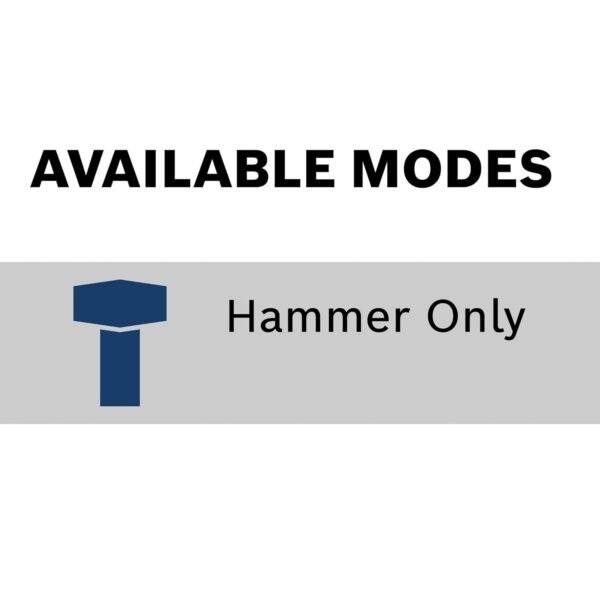
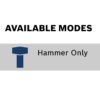
On smaller jobs such as removing an old concrete slab, the in-line design helps maintain steady control once the technique is learned, though that learning curve is real. The weight is always present, and the handles and vibration reduction make it manageable in shorter sessions rather than irrelevant. Anyone whose work mixes drilling with breaking should look at a combination hammer such as the Bosch RH540M, since this machine only breaks. It is a demanding tool that delivers professional results and requires proper technique to run safely.
Taken together, this is a jack hammer that excels in power, durability and maintenance features, with weight and portability as the trade-offs. The BOSCH Demolition Jack Hammer 11335K suits serious demolition work where performance and reliability come first, and it sits at the heavy end of the rotary and demolition hammer range.