
Description
Compact Design for Tight Spaces
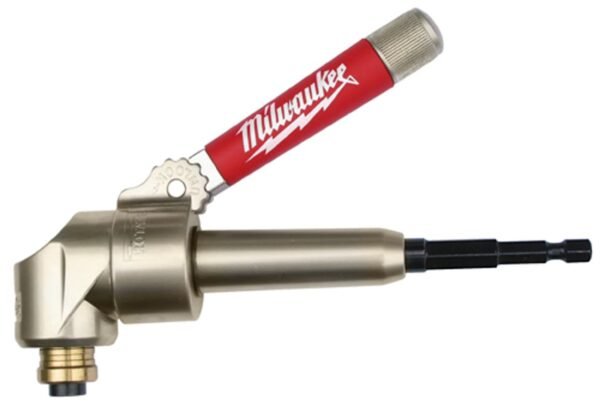
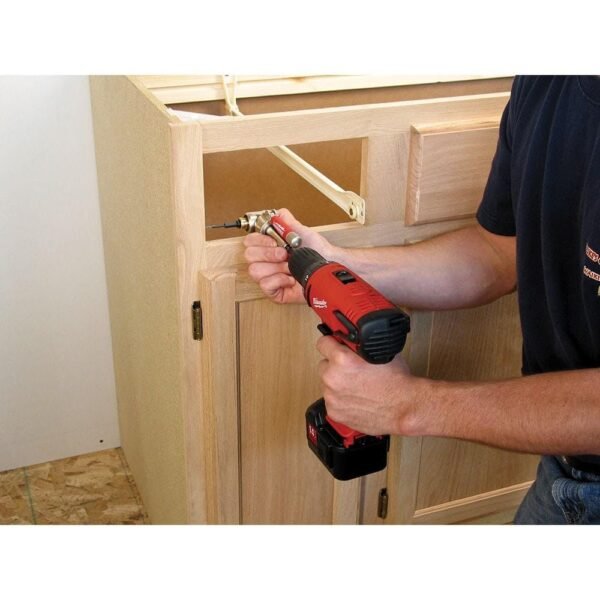
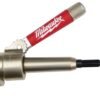
The Milwaukee Kit Right Angle Attachment, 9.5″ x 1.75″ x 6″ exists to solve one problem: getting a driving axis into spaces a drill body cannot enter. At roughly 2 inches wide it passes into corners and cramped framing where a standard drill cannot be squared to the work, which is the usual obstacle behind cabinets and inside stud bays. The compact envelope costs less capability than the size suggests. The all-metal housing is the durability specification, and it is the reason this class of attachment survives site conditions that break polymer equivalents.
Performance and Torque Handling
The attachment is rated to handle up to 235 inch-pounds of torque, a reasonable figure for an accessory of this type and enough for most screw driving and hole drilling in wood, drywall and light metal. Steel gears with ball bearing construction are what carry that load smoothly, and they are the components that separate a long-lived attachment from a disposable one.
Compatibility is described inconsistently in the listing and is worth checking before purchase. One passage states the adapter suits most 18-volt cordless drills, while another restricts it to drills with a 1/4-inch hex drive. The likely explanation is that the 1/4-inch hex refers to the attachment’s own quick-change bit holder rather than to a requirement of the host drill, but as published the two statements do not agree. Confirm the mounting shank against the drill you intend to use it with.
Versatile Quick-Change Chuck
Bit changes run through a quick-change magnetic chuck that accepts standard 1/4-inch hex drive accessories, so there is no need for proprietary bits. On a job that alternates between drilling and driving several fastener types, that is where the time is saved, since the alternative is unscrewing a chuck at an awkward angle. It is a small design decision that reflects how the tool is actually used.
Practicality and Handling
The main adjustment when using a right angle attachment is the changed direction of applied force. The wrist works differently than with a straight drill, and it takes a short period to adapt. In exchange it opens access to areas that would otherwise require dismantling something first. The low weight, just a little over a pound, keeps arm fatigue down during overhead work and in tight cabinet spaces. The all-metal build does transmit cold in unheated environments, a minor but real comfort issue. Buyers who need that access regularly should compare a dedicated tool such as the M18 Fuel 2807-20 right angle drill.
Price to Quality Ratio
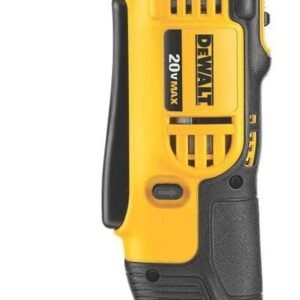
On value, the attachment makes a strong case. It is not the cheapest accessory available, but the materials and rated performance justify the cost, and it can replace a separate right angle drill in many situations. For electricians, plumbers and DIY users who meet tight spaces regularly, the price is modest next to a full right angle drill such as the DEWALT DCD740B. The question worth answering first is how often that access is genuinely needed, since an attachment used twice a year is harder to justify than one reached for weekly.
Drawbacks to Consider
Some limitations follow from the format. The torque rating, while adequate for its class, will not cover heavy-duty drilling or large fasteners, so demanding work still points to a dedicated tool. The metal housing adds weight relative to plastic alternatives, which tells during prolonged use. No bits or carrying case are included, so those are additional purchases. Compatibility, as noted above, is documented ambiguously and should be verified against the host drill rather than assumed.
Competitive Options
Against other right angle attachments and dedicated right angle drills, this one holds its position. DeWalt and Bosch offer comparable attachments, while Milwaukee’s version leads on ball bearing construction and steel gears, which improve longevity and running smoothness. Some competitors list marginally higher torque or slimmer profiles, usually at a higher price. The quick-change chuck is the differentiating feature and is not universal among rivals. For genuinely heavy-duty applications a dedicated right angle drill remains the better answer, and the compact M12 Fuel 2505-22 installation drill covers similar ground with interchangeable heads. This attachment is aimed at light to medium tasks in confined spaces where portability and adaptability matter most.
Key Benefits
- Fits into extremely tight spaces thanks to its compact 2-inch width
- Durable metal housing with steel gears and ball bearing construction for smooth operation
- Handles up to 235 inch-pounds of torque suitable for most drilling and driving tasks
- Convenient, quick-change magnetic chuck compatible with standard 1/4-inch hex bits
- Lightweight at just over a pound, reducing user fatigue during use
Areas for Improvement
- Torque capacity may not be enough for heavy-duty drilling or larger fasteners
- Heavier metal housing compared to plastic alternatives could cause arm fatigue over time
- No bits or carrying case included, requiring separate purchases
- Host drill compatibility is documented inconsistently and needs checking
The attachment addresses a problem most trades meet regularly: reaching tight, awkward spaces without carrying a bulky right angle drill as well. It has clear limits on torque and its documentation could be clearer, but within those bounds it delivers dependable performance, convenience and durability for its size and price. Paired with a compact host such as the M18 2801-20 drill driver, it covers most of what a separate tool would, and the full field sits in the right-angle drills category.