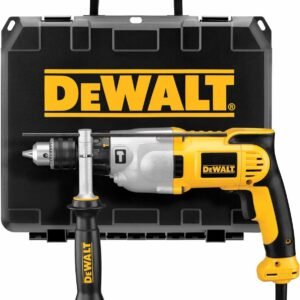
Description
Positive Features of the DEWALT Rotary Hammer Drill
The DEWALT DCH133B 20V Max XR Brushless 1” D-Handle Rotary Hammer Drill is built around a 2.6 joule mechanism, an impact energy figure that puts it in the range normally occupied by corded rotary hammers rather than cordless ones. The brushless motor technology is specified to extend both runtime per charge and overall tool life, which matters most to users who would otherwise be swapping packs through the day. Electronic speed control is designed to hold speed under load rather than letting the motor bog down in large masonry bits. The compact size is a real specification rather than marketing language, and it is what allows the tool into confined work such as basement and cavity walls.
- 2.6J impact energy rating for faster drilling
- Brushless motor extends battery life and tool lifespan
- Compact and ergonomic design for confined spaces
Drawbacks to Keep in Mind
Several limitations sit alongside those strengths. The tool is sold as a bare tool, so a battery and charger are separate purchases, which catches out buyers expecting a complete package. At nearly 6 pounds, it is tiring over long overhead sessions despite the compact dimensions. The listing data also conflicts on capacity: the product is named as a 1 inch rotary hammer, yet the maximum chuck size is given as 20 millimetres, which is roughly 0.79 inch, so the two figures cannot both describe the same limit and the true maximum bit diameter is worth confirming before you buy. The plastic housing is durable but not as robust as all-metal rivals, which is a consideration in rough environments.
- Battery and charger sold separately
- Heavier than some competing cordless rotary hammers
- Chuck size limits maximum bit diameter
Versatility and Performance in Various Applications
The specification covers a wide material range. Wood capacity is rated to 16 mm, while the optimized impact mechanism handles concrete and masonry, which is the work this class exists for. The cordless format combined with 20V output means it covers both heavy and lighter tasks without a supply cable, and that is the decisive advantage on renovation work where outlets are scarce or already in use. The D-handle design improves control and reduces fatigue relative to a pistol grip, particularly where the tool must be held steady for accurate hole placement. Buyers comparing this against DEWALT’s larger SDS units should look at the DCH273B.
Build Quality and Ergonomics
The yellow and black DEWALT color scheme keeps the tool easy to identify in a cluttered van or toolbox. Its plastic and metal construction balances weight against durability, though a higher metal content would improve toughness for the roughest use. The listed dimensions (16″L x 8.5″W x 3.9″H) describe a manageable tool that is still substantial enough for serious drilling. The handle grip is positioned to keep the wrist neutral, which is what makes overhead and odd-angle drilling workable rather than awkward.
Value Proposition in the Cordless Hammer Drill Market
On price to quality ratio, this rotary hammer represents sound value for professionals and committed DIY users. The brushless motor and impact energy rating are what justify the price, alongside the expected durability and runtime. Buying batteries separately adds cost, but the ability to run existing 20V Max packs is a genuine saving for anyone already holding DEWALT tools. Against budget alternatives, the specification and build quality support the premium for buyers who need dependable hammer drilling rather than occasional use. The hammer drill category shows where it sits against the rest of the field.
Product Comparisons: How It Stands Against Rivals
Set against rivals such as the Makita XRH01Z or Milwaukee’s M18 FUEL line, the DEWALT competes well on power and compactness. Makita’s rotary hammers, including the HR2475, run lighter with strong vibration control but are not specified for the same electronic speed maintenance under heavy load. Milwaukee’s equivalents, such as the 2712-20, list greater battery capacity and a larger chuck, at a higher price and in a bulkier body. The DEWALT’s compact profile and impact energy make it a strong option where maneuverability and consistent drilling speed matter most. Where minimum weight is the priority, Makita has the edge.
Reported Owner Feedback
Feedback on this model concentrates on two things. The first is the ability to hold speed without bogging down when moving between masonry and wood, which is the practical expression of the electronic speed control. The second is the D-handle grip, which owners coming from pistol-grip drills generally find easier to control, while also noting the tool feels heavy in the hand at first against a standard cordless drill.
The missing battery and charger is the most common complaint on this listing, since it requires planning before the first job. The 90-day limited warranty quoted here is also unusually short for a tool at this price and duty level, and it is worth checking against the current DEWALT terms for the region you are buying in. A separate look at the same DCH133B covers its rotary hammer specification in more depth.
Final Notes on Features and Settings
The tool offers three-mode operation: drill, hammer drill, and chisel, selected through a single control. The electronic controls govern speed and torque, which supports both delicate starts and full output in tougher material. The absence of a cord is what makes the tool practical in awkward locations. One notable omission is the lack of a built-in LED light, which is increasingly standard at this price and is missed in dim spaces.
The DEWALT DCH133B 20V Max XR Brushless 1” D-Handle Rotary Hammer Drill shows how far cordless rotary hammers have come on paper. It combines impact energy, a compact body, and electronic control in a tool that suits professional sites and weekend projects alike. The drawbacks are minor but real, chiefly the bare-tool packaging, the weight, and the conflicting capacity figures noted above.