Description
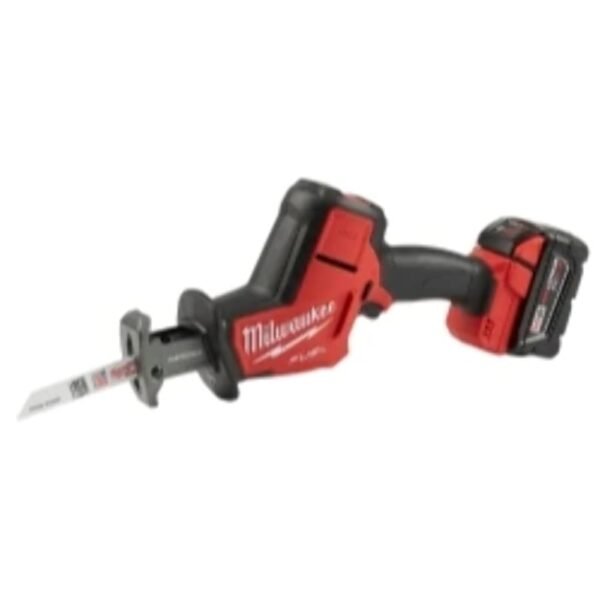
Highlights of the Milwaukee Electric Tools 2719-21 M18 Fuel Hackzall Kit
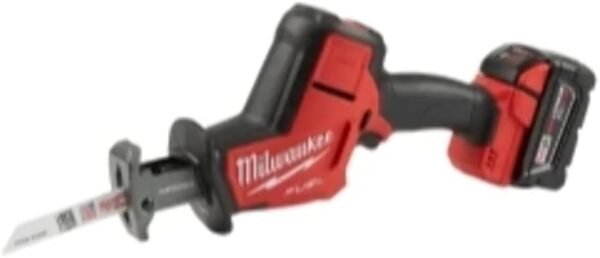
The Milwaukee Electric Tools 2719-21 M18 Fuel Hackzall Kit sits in a narrow part of the cordless market: one-handed reciprocating saws bought mainly for metal. The specification leads with a POWERSTATE Brushless motor, which is what allows a tool this small to hold cutting speed under load instead of stalling in the cut. The 7/8″ stroke length is long for a one-handed saw, and stroke length is the number that decides how quickly a blade clears its own swarf when cutting steel. Milwaukee rates the tool at up to 50% faster than competitive one-handed saws, a manufacturer claim rather than an independent figure, though the stroke and motor specification are consistent with it. The one-handed layout is the real argument here, since it frees the other hand to steady the work.
- Cuts metal with up to 50% faster speed than competitors
- Brushless motor provides consistent power and longer tool life
- Compact, one-handed design offers strong control in confined areas
Drawbacks That Might Affect Some Users
The limitations are worth stating plainly. The listed weight of 6 pounds is a lot to hold at arm’s length repeatedly, and one-handed use is exactly the situation where weight punishes the user fastest. The vibration control helps, but it does not cancel the load on the forearm. The battery life from the M18 REDLITHIUM XC5.0 pack is competitive for the class, though metal cutting is among the most demanding things an 18V pack is asked to do, so a spare is realistic rather than optional. The last drawback is price: this is a premium tool, and casual users will struggle to justify it. Anyone who mainly wants a lighter tool in hand should be looking at Milwaukee’s smaller M12 platform, which trades output for weight.
- Tool weight may cause fatigue in prolonged use
- Battery can run out during heavy-duty tasks without extras
- Higher price point compared to some alternatives
Cutting Power and Performance
The brushless motor paired with the dual gear counterbalance mechanism is the interesting engineering here. Milwaukee rates the result at up to 4 times lower vibration than traditional reciprocating saws, and on a one-handed tool that figure matters more than it would on a two-handed saw, because vibration is what makes the blade wander at the start of a cut and leave a ragged edge in metal. The REDLINK Plus intelligence system handles the electronic side, managing power draw, guarding against overheating and preventing the pack from being run flat past the point of damage. That communication between tool, battery and charger is the reason performance stays consistent across a charge rather than tailing off.
Versatility and Ease of Use in Different Scenarios
The kit is built for awkward work. Cordless operation, a rubber-sealed body and weep holes give it a measure of resistance to water and debris, which is aimed squarely at outdoor and rough site conditions. One caution on the data: the listing’s size field of 18″ L x 5″ W x 11″ H reads like packaging dimensions rather than the saw itself, since an 18 inch body would defeat the point of a one-handed tool, so that block should not be used to work out whether it fits a particular gap. The plastic and rubber handle is shaped for a firm grip, which is what makes controlled cuts possible with one hand, and blade changes are tool-free, a small convenience that adds up across a day of repetitive cuts.
Value Assessment: Is It Worth the Investment?
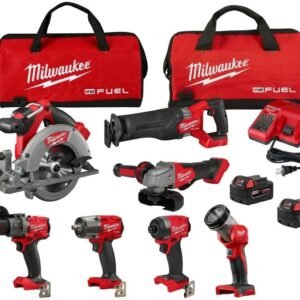
On features and specification, the value proposition points at professionals and committed DIY users who cut metal regularly and want a saw that will not slow down. The advanced electronics and brushless motor are the parts that justify a premium over cheaper saws, since both address the failure modes that end budget tools early. Occasional users cutting the odd bolt will find the price hard to defend. If more than one M18 tool is on the shopping list, the arithmetic changes quickly, and a full six tool M18 kit spreads the cost of batteries and charger across several tools instead of one.
Product Comparisons: How It Stacks Up Against Rivals
Against other one-handed reciprocating saws such as the DeWalt DCS367 or the Makita XRJ05Z, the Milwaukee argument is cutting speed and vibration reduction. Rivals are sometimes lighter, and that is a genuine advantage, but the lighter tools generally give up either power or vibration control, both of which show up as user fatigue and slower cut starts. The REDLINK Plus electronics are the differentiator on protection and power management. Competitors counter on price, and on battery ecosystem, which is the deciding factor for anyone already invested in another brand. That ecosystem argument cuts both ways: the same M18 pack runs tools like the M18 Fuel high torque impact wrench, so the platform gets cheaper with every tool added. For metal cutting in confined spaces, this saw remains the stronger specification.
User Experience and Comfort
The comfort case rests on two design decisions. Reduced vibration is what makes a saw usable for more than a few minutes at a stretch, and the one-handed design is what makes it usable at all in positions where a two-handed saw cannot be braced. Together they suit anyone who finds heavier tools awkward, which includes plenty of experienced tradespeople working overhead. The counterweight to that is the six pound mass noted earlier, so the comfort gain is real but conditional on short bursts rather than continuous cutting. The tool’s durability claim rests on the sealed body and brushless motor rather than on any published drop or endurance rating, so treat it as a read on construction. There is also a short familiarization period before most users get the best from the trigger and blade selection, which is normal for tools in this class.
Additional Features Worth Noting
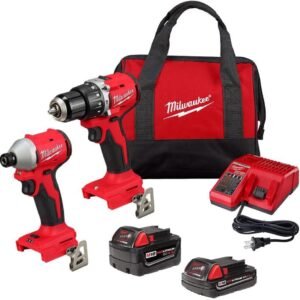
The kit ships with a single high capacity Lithium Ion battery, so it is usable straight out of the box, and a limited warranty covers the tool. The supplied metal cutting blade signals the intent clearly: this is a specialist for tougher materials rather than a general-purpose saw, and blade choice will matter more here than on a wood-focused tool. The red and black color scheme is easy to pick out in a full toolbox, which sounds trivial until a tool goes missing on a site. The same M18 pack that powers this saw runs the rest of the line, including the 3697-22 hammer drill combo, which is the usual second purchase.
The specification here describes a saw built around power, precision and control in one hand rather than outright reach. For anyone cutting metal in tight spaces who wants to keep fatigue down, it belongs on the shortlist alongside the other M18 combo kits.