Description
Performance and Power of the Rotary Hammer
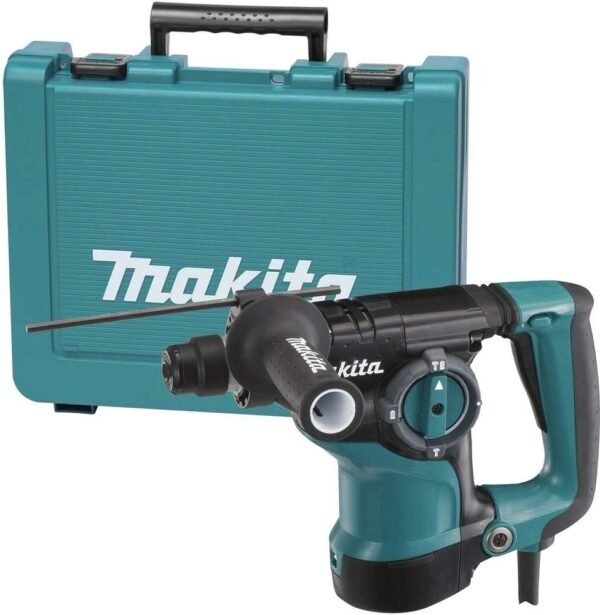
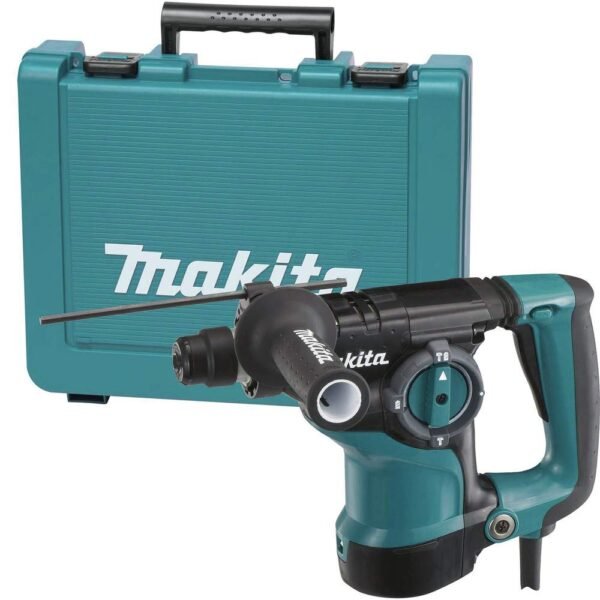
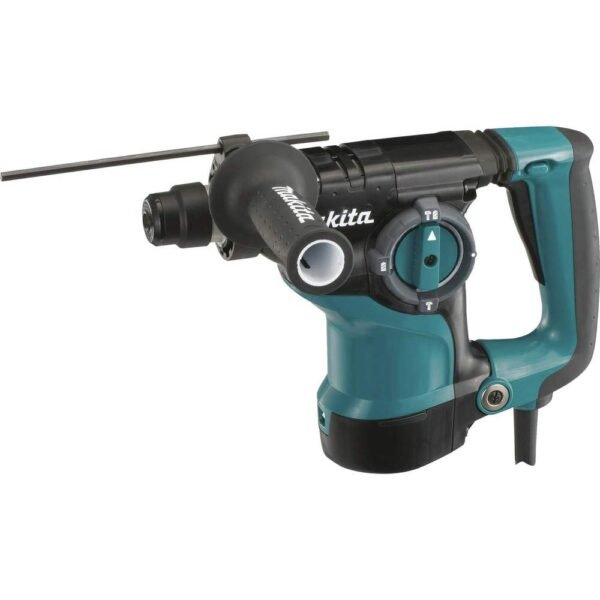
The Makita HR2811F 1-1/8” Rotary Hammer is specified around a 7.0 AMP motor rated to 1100 RPM and 4500 BPM. Those numbers put it squarely in the class of tools meant for sustained drilling and hammering rather than occasional holes. The 2.1 foot-pounds of impact energy is the figure that decides how quickly concrete and masonry give way, and it is enough to keep a working pace without leaning on the tool. Variable speed control is what makes that power usable, letting the hammer be tuned to the material instead of running flat out on everything. At around 7.26 pounds it is strong without being unwieldy, controllable for extended periods, though a full day of continuous work will still be felt.
Ergonomic Design and User Comfort
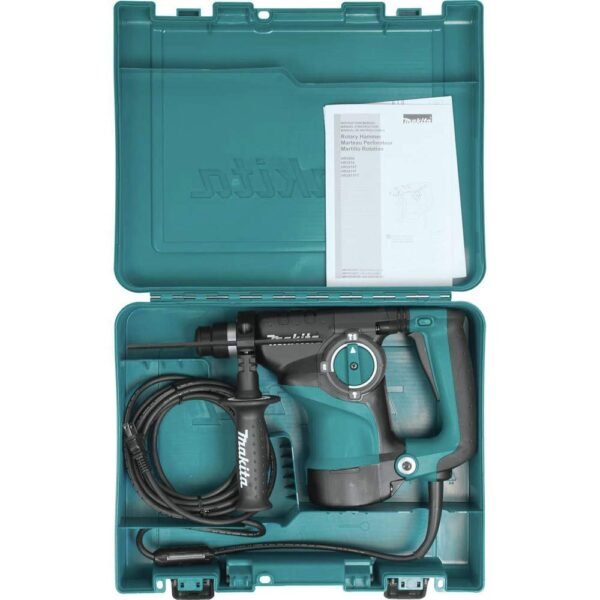
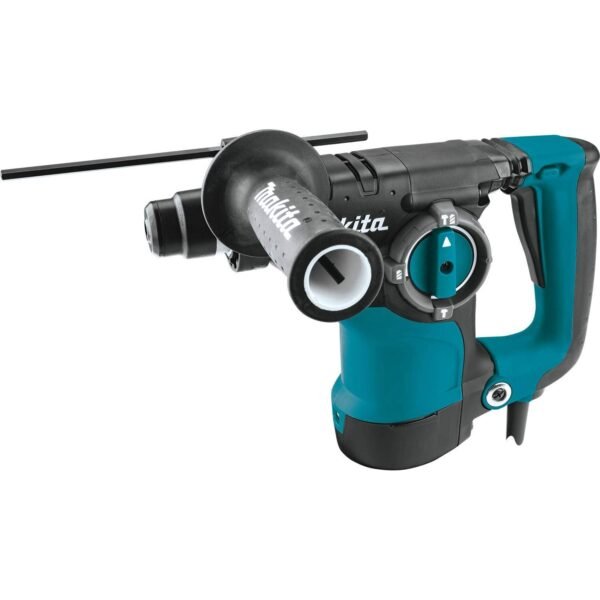
The L-shape design is built for horizontal work and the balance reflects that, which shows in overhead and sideways drilling where the weight sits where it should. The vibration-absorbing back handle is the feature that reduces strain through the wrist and arm, and it is what keeps the tool steady in hammer drilling mode. That damping puts it ahead of rotary hammers that pass everything straight to the operator, and buyers who want more of it again should look at the HR2641 with Makita’s anti-vibration system. The side handle and depth gauge supplied with the tool add control and repeatable accuracy, which matters as much as raw comfort on a long installation run.
Versatile 3-Mode Operation
The 3-mode operation is the standout feature: “rotation only”, “hammering with rotation” and “hammering only”. That flexibility covers everything from simple drilling in wood or metal to heavy concrete work. The “rotation only” mode runs smooth and steady, which is what delicate tasks need, since hammer action would damage the material or the fixing. The “hammering with rotation” mode delivers the impact that speeds up drilling in brick and concrete. The “hammering only” mode turns the tool into a light chipping hammer for demolition work. Switching between modes is straightforward and the controls are responsive, which is what makes the versatility real rather than theoretical.
Illumination and Additional Features
The LED light positioned near the drilling surface is more useful than it sounds on a spec sheet. In basements, service voids and poorly lit corners it puts light exactly where the bit meets the material, which improves accuracy at the moment placement matters most. The “no hammering when idling” function is the other quiet win, cutting vibration when the tool is not actively hammering. That improves comfort and reduces needless wear on the mechanism, which over years is what separates a tool that lasts from one that rattles itself apart.
Drawbacks and Things to Consider
The hammer impresses in most areas but it has quirks. The weight, at just over 7 pounds, adds up during all-day use and particularly on overhead work, where vibration management helps but does not eliminate fatigue. The L-shape design that suits horizontal drilling is bulky and awkward for vertical tasks or confined spaces. The listing’s 10 millimetre maximum chuck size needs care: it contradicts the tool’s own 1-1/8 inch rating and appears to describe the SDS-plus shank standard rather than the largest hole the hammer can drill, so it should not be used to judge bit compatibility. Anyone who genuinely needs larger diameters belongs on an SDS-MAX machine such as the Makita HR4002. Running on 110 volts also ties the tool to mains power, which rules it out on remote sites without a generator.
Price to Quality Ratio
Measured against the features it carries, this rotary hammer offers solid value for money within its class. The powerful motor, variable speed, and multi-mode operation justify the outlay for anyone regularly handling demanding drilling or demolition. Extras like the depth gauge, side handle, and LED light add to the package rather than padding the price. Hobbyists and occasional users will find it expensive and more capable than their work requires, and the lighter Makita HR2475 is the sensible alternative there. For a professional or a serious DIYer, the cost stands up to what the tool delivers.
Highlights of the Makita Rotary Hammer
- Powerful 7.0 AMP motor delivering 2.1 ft. lbs. of impact energy
- Three versatile modes: rotation only, hammering with rotation, and hammering only
- Vibration-absorbing back handle for improved user comfort
- LED light for better visibility in low-light environments
- “No hammering when idling” feature to extend tool life
Limitations to Keep in Mind
- Relatively heavy at 7.26 pounds, which may cause fatigue during extended use
- Chuck size field (10 mm) is inconsistent with the tool’s 1-1/8 inch capacity rating
- L-shape design can be awkward for vertical or tight-space drilling
- Requires 110V power source, limiting portability in some work environments
Product Comparisons with Competitors
The Makita competes directly with Bosch and DeWalt in this size class. Against Bosch rotary hammers it holds its own on power and versatility, though Bosch often fits slightly better vibration control, and the Bosch RH328VC is the direct comparison worth making. DeWalt models frequently offer larger bit capacity, which appeals to buyers drilling wider holes. Makita’s durability and efficient motor design, including the steel lamination and copper commutator bars, is where the long-term reliability argument sits. The LED light and the “no hammering when idling” function are both less common among rivals, which makes this hammer attractive for dim environments and for owners who care about service life. It is neither the lightest nor the largest capacity tool in the class, but the package balances power, comfort and function well.
Set beside similar models, its strengths are energy transfer efficiency and versatility, particularly through the three operating modes. For buyers who value those, it is a strong contender. For anyone whose priority is maximum portability or larger bit sizes, the broader rotary hammer listing is worth working through first.