
Description
Durable Construction and Powerful Motor
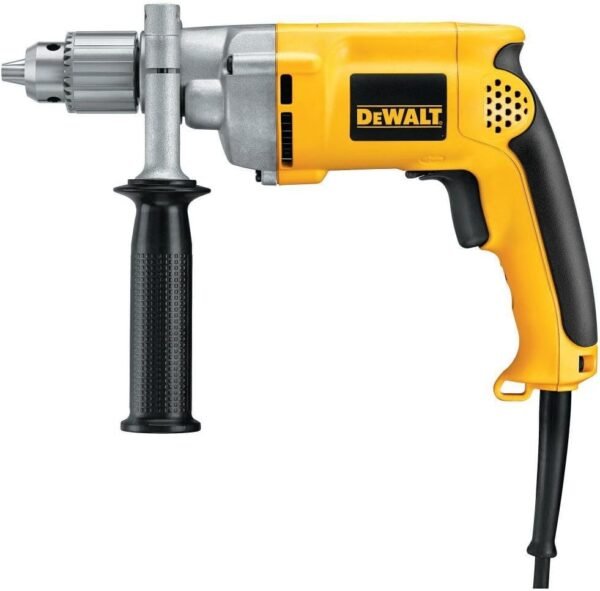
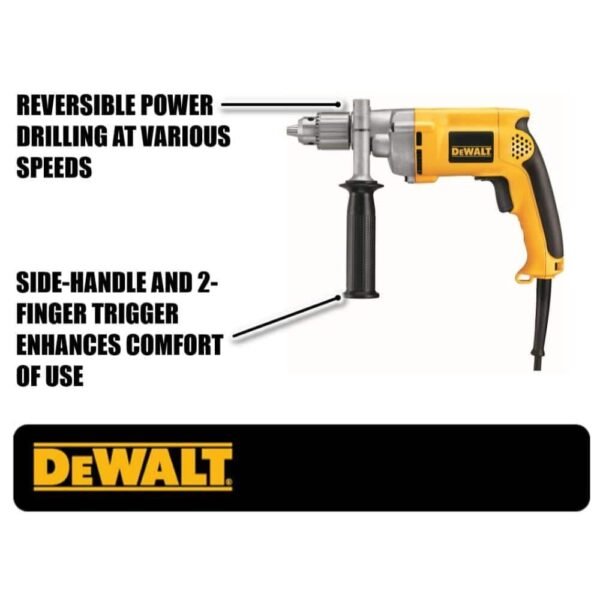
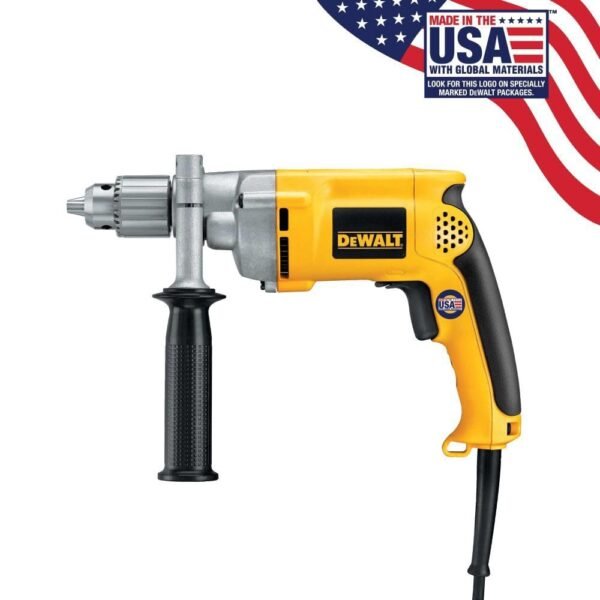
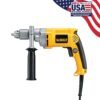
The DEWALT Corded Drill, 7.8-Amp, 1/2-Inch, Variable Speed Reversible (DW235G) is specified around durability first. The heat-treated, helical-cut steel gears are the component that decides service life in a corded drill, and helical cutting also runs quieter and smoother under load than straight-cut gearing. The metal gear housing carries heat away and survives the knocks that crack plastic casings, which is why this construction is standard on jobsite-grade tools. The 7.8 amp motor is rated for sustained drilling, spinning bits to 850 rpm, a deliberately low ceiling that trades speed for torque in hardwood and sheet metal.
Comfortable Handling and Versatile Controls
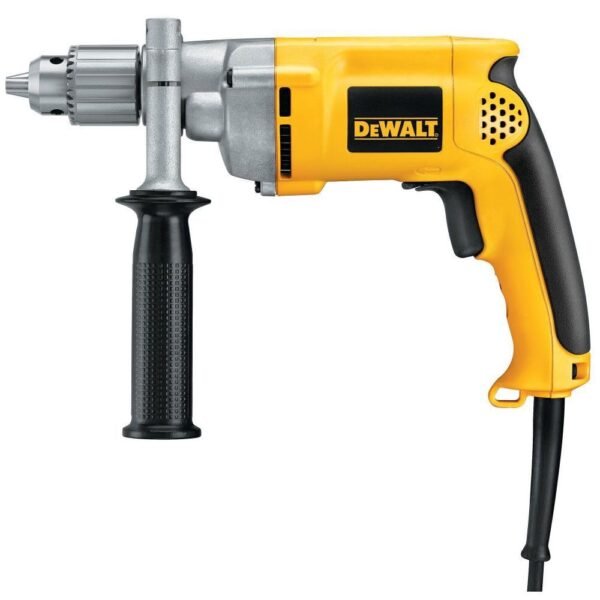
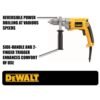
Comfort matters over long sessions, and the control layout addresses it. The pistol grip with a two-finger rubber trigger spreads load across two fingers rather than one, which reduces fatigue on extended runs. The variable-speed control covers 0 to 850 rpm smoothly, giving the slow starts that accurate hole placement depends on. The 360-degree side handle is the feature that matters most on a 1/2 inch corded drill, since it gives the second hand a purchase against the considerable torque reaction these tools generate at low speed. Note that the listed weight is inconsistent in the product data, given as about 4.9 pounds in one place and 5.65 pounds in another, so treat the heavier figure as the safer planning number until you can confirm it.
Multiple Drilling Applications and Secure Chuck
The 1/2-inch keyed chuck grips harder than a keyless equivalent, which is what prevents bit slippage under the high torque this drill produces. It suits a wide range of bits including twist bits, spade bits, auger bits, and hole saws. In wood, the rated capacity extends to hole saws up to 3-1/2 inches in diameter and self-feed bits up to 2-1/8 inches. In metal, it is rated for a 1/2-inch twist bit and 2-inch hole saws. That spread of capacities is what makes it a genuine all-rounder for home improvement and jobsite work rather than a specialist tool. Buyers wanting the same corded reliability with more amperage should compare the 10 amp DWD210G.
Price Performance and Value Assessment
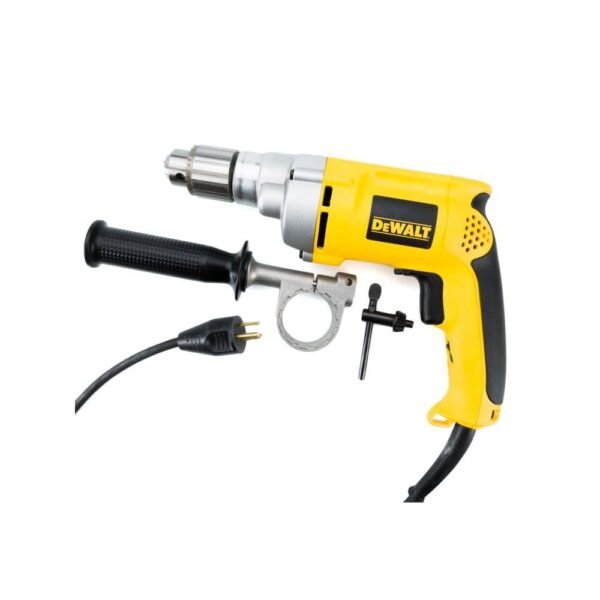
Weighing the specification against the price, the price-to-quality ratio holds up well. It is not the cheapest corded drill available, but the motor rating, gear construction, and grip design justify the difference against budget models that use plastic housings. The included 360-degree side handle and chuck key with holder add usable value at no extra cost. The three-year limited warranty and one-year free service are longer than much of the category offers and are a meaningful part of the value case. For a drill expected to last through repeated heavy use, the pricing is reasonable, and the drill driver category puts it in context against both corded and cordless rivals.
Downsides and Areas for Improvement
Several limitations are worth weighing. The corded design ties the tool to an outlet, which restricts mobility next to cordless models, and the supplied cord is short enough that an extension is often needed on larger sites. There is no built-in LED lighting, an omission that is felt in dim areas. The drill is loud under heavy load, which is a consideration for indoor work in occupied buildings. The weight, whichever of the two published figures is accurate, increases further once the side handle is fitted, though it remains manageable for a tool in this class.
Good Points That Stood Out
- 7.8 amp motor delivers strong, consistent torque.
- Ergonomic pistol grip and two-finger trigger support control and comfort.
- 360-degree side handle improves maneuverability and reduces fatigue.
- Metal gear housing and heat-treated steel gears support long tool life.
- Wide drilling capacity across wood and metal, supporting many bit types.
Limitations Worth Considering
- The corded design limits portability, particularly without a long extension lead.
- No built-in LED work light, which would aid precision in low-light conditions.
- Runs loud during heavy use, which may bother some users.
- Heavier than compact drills, especially once the side handle is fitted.
Product Competitors and Comparison
Against competitors such as the Makita 6407 or the Bosch 1006VSR, the DEWALT leads on build and motor rating. Makita’s offering is lighter and quieter but less powerful, which suits lighter tasks and limits versatility. Bosch’s corded drills are more compact but do not specify the same metal housing and heat-treated gearing. The DEWALT’s variable speed control and 360-degree side handle give it an advantage in comfort and control. Cordless models, whether from Milwaukee or DEWALT’s own range such as the 20V MAX XR DCD800B, offer better mobility while giving up the constant power delivery a mains supply provides. Where power and build quality outrank portability, this corded drill is the stronger option. For a smaller corded alternative, the 3/8 inch DWD110K covers lighter work.
The straightforward control layout and solid construction make this a tool that less experienced users can pick up without difficulty, which is often exactly what a shared workshop drill needs to be. The three-year warranty and after-sales service reinforce the durability case. Taken as a whole, this drill is a workhorse for anyone needing dependable power in fixed or workshop settings where a mains supply is available. Buyers needing more torque again for mixing and large-diameter boring should look at the Milwaukee 1680-20 Super Hawg.